
Pau
Certified IFS Practitioner & Coach
English · Polish (if you ask nicely)
Steady, warm, and not easily knocked over by a room with two people's protectors in it. Particularly good when old hurt is running the fights.
Couples · IFIO-informed · online
Couples rarely fight about what they're fighting about. Usually one person's protector sets off something tender in the other, whose protector then sets off the first, and the argument about the dishes is the surface of that loop. In these sessions we slow it down until you can both see the loop instead of each other.
English · Italian · Polish (if you ask nicely)
200 EUR for 75 minutes, both of you, by video. An introductory price while we open the couples practice.
Who it's for
Most couples come because something hurts. Some come because things are good and they want more. Both are welcome, and the model works for both.
How it runs
The approach comes from IFIO (Intimacy from the Inside Out), the couples branch of IFS developed by Toni Herbine-Blank. Nobody is the patient and nobody is the problem.
When things heat up, we pause and ask each of you what just happened inside — before either of you answers the other.
"A part of me is scared you'll leave" lands differently from "you always leave." It's harder than it sounds, and it's most of the skill.
Without defending, fixing or keeping score. We help with that, because protectors hate it at first.
Usually small: a phrase, a pause, a way of asking for a timeout that the other can hear.
Who you'd work with
Both of us have done IFIO training: Pau's Level 2 with Toni Herbine-Blank, and Alex's Level 2 came through IFIO. Both of us also bring years of work on relating, sexuality and non-monogamy, so nothing you bring will be exotic to us.
Certified IFS Practitioner & Coach
English · Polish (if you ask nicely)
Steady, warm, and not easily knocked over by a room with two people's protectors in it. Particularly good when old hurt is running the fights.
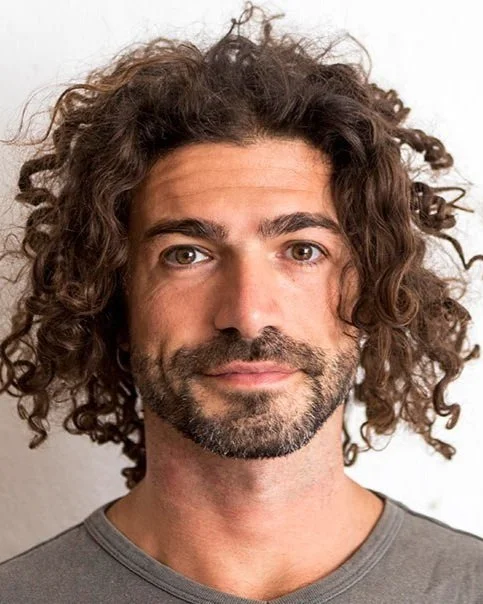
Level 2-trained IFS practitioner, coach & facilitator
English · Italiano
15+ years of facilitating relating and intimacy workshops. Particularly good when you want to move — a decision about the relationship, an agreement to renegotiate, more life in it.
We're opening the couples practice now, and the price reflects that.
75 minutes · both partners · one practitioner
The same whether you're working through something hard or working on more of what's good.
75–90 minutes · both partners · two practitioners
Some partners worry that a practitioner will side, or seem to side, with the other — because of gender, or anything else. With one of us for each of you, that worry has less to hold on to. It costs considerably more, and we price it case by case: write to us.
A way of doing couples work with IFS, developed by Toni Herbine-Blank. Each of you works with your own parts, in real time, while the practitioner tracks both systems and what passes between them.
IFIO began as a couple-therapy model, but neither of us is a licensed therapist, so what we offer is couples sessions informed by it. If you need clinical couples therapy — for example, alongside a diagnosis — we'll say so.
No. Neither of you needs to know the model. Curious and willing is enough; sceptical is fine too.
Yes, and without treating the structure as the problem. See IFS and ethical non-monogamy.
Tell us a little about what's going on and which of you is writing. We'll reply with times, and with which of us we'd suggest.